|
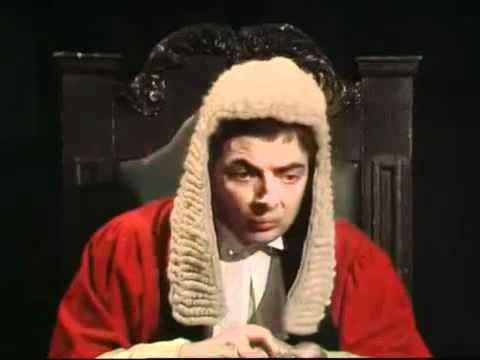
| Rowan Atkinson. Image courtesy of BBC |
Dave Allen was fabulous, Douglas Adams was gracious, Rowan Atkinson was charming, and Mel Smith was obnoxious. Arthur Lowe of Dad's Army was downright boring.
How do I know this? Because I interviewed them all and many others during my time hosting a regional news programme in New Zealand during the 1980s .
(A note of caution: many of the famous people I interviewed are now dead, so if anyone suggests I should talk to you, run for the hills)
Before I spill the beans on some of the world's rich and famous, let me explain how I came to be in a position to meet these noters. In a nutshell, I had joined what was, back in the late 1970s, the BCNZ - the Broadcasting Corporation of New Zealand. I worked firstly in radio as an announcer with Radio New Zealand (RNZ), and after a couple of years moved into television (TVNZ) as a continuity announcer.
In those days, as in the UK, TV announcers appeared on screen between the programmes to back-announce one programme and preview those coming up. We did this live on air, and wrote our own scripts. Quaintly, there were only women on the day shift and men on the evening shift. We males got the raw end of the deal as we were on duty till midnight.
 |
| Continuity announcing, like flying... |
Live continuity announcing was like flying – long periods of boredom interrupted by moments of sheer terror. Being live on TV was tense, because usually you had only a minute or so to do your stuff between programmes, and then while the programmes themselves were playing you had nothing to do at all, except maybe chat to the Programme and Technical Directors, or read a book. Or of course watch television.
So it wasn't too long before I started looking for other opportunities, but first I had my first ever meeting with someone famous.
I was asked to interview Arthur Lowe, well known at the time for playing Captain Mainwaring in the enormously successful British comedy Dad’s Army.
He was visiting our studios for some reason, and one of the Programme Directors persuaded him to be interviewed on tape, for possible broadcast. It was a very last-minute arrangement, and all I had to go on by way of research was an old copy of the BBC’s Who’s Who on TV. The biographical information on Lowe was minimal, though it did mention he was interested in vintage steam boats.
So, Arthur Lowe and I are sat in one of the small presentation studios with a camera glaring at us, and I start asking him questions.
 |
| Yawn... |
My first mistake was that I expected him to be funny, since he reduced everyone to tears in every episode of Dad’s Army. I was so wrong.
Arthur Lowe was one of the dullest men I’ve ever met. I thought I would lead him onto the subject of vintage steam boats, and asked, ‘So what do you like to do in your spare time?” To which he replied with a shake of his head, ‘Oh I don’t have any spare time.' End of conversation.We recorded a 15-minute interview, and when we reviewed it later (after Lowe had left) we found we couldn’t use any of it; he was just so incredibly boring. It was a big disappointment for me, but also an eye-opener, because I realised (many years later) that it was actually my fault.
My problem was I was still wet behind the ears as far as interviewing was concerned, and very naïve. I'd expected him to be amusing, but in fact he was a comic actor, not a comedian. However, that shouldn’t have made him any less interesting.
What I should have done was ask him why didn’t he have any spare time, was he a
workaholic, what other work did he do apart from Dad’s Army, how did this impact on his family life, and so on. Unfortunately I didn’t, and worse: it was a mistake I was to repeat with someone more famous later. But at the time the conclusion we reached was that Arthur Lowe was just dull.The novelty of live continuity announcing wore off after 18 months or so, though I knew I loved the television medium, so when a vacancy for a news anchor role came up I applied, and after a successful audition and interview I got the job.
 |
| Good Evening and welcome to Today Tonight |
Suddenly I was in a role that carried a lot more gravitas. I was a newsreader and interviewer, with the added bonus of being able to go into the field to record short features. And every evening, Monday through Friday, we the regional news team had to deliver live local news, between 6.40pm and 7.00pm, which I fronted. It was my first experience of working in a busy newsroom, and I loved it.
Perhaps the best part of the news anchor job though was the chance to interview some really famous people, either live in the studio or out 'in the field' on film (yes, it was 16mm film then, not video tape – that came later).
Every time someone famous came to town to do a show or similar we would get the chance to interview them. In the time I fronted Today Tonight – about four years – I met and interviewed stars as diverse as Barry Humphries (Dame Edna), Douglas Adams (Hitchhiker’s Guide to the Galaxy), scientist and astronomer Carl Sagan, French mime artist Marcel Marceau, the Botanic Man Dr. David Bellamy, comedians Mel Smith and Griff Rhys-Jones, Irish comedian Dave Allen (Yes, okay, I know he looks bored in the photo but he wasn't; I'm scintillating company, especially with a glass of wine in hand...) Great Dane Victor Borge, astronomer Sir Patrick Moore, the legendary Rowan Atkinson and the equally legendary Spike Milligan. |
| Dave Allen and I waiting while the crew set up |
Bands such as Dire Straits and the Hollies joined the list along with some local Kiwi noters too, such as poet Sam Hunt, Prime Minister Rob Muldoon and property magnate Sir Bob Jones, among others.
Because the programme was only 20 minutes’ duration our interviews were, of necessity, short – usually no more than five minutes’ long. In the studio this meant being quite strict with timing, but in the field you could interview at length and then edit down afterwards. Thus it was my interview with Rowan Atkinson in the studio passed in a flash. I can’t now recall what we talked about, but he was very gracious. At that time he was known for his role in the British comedy Not The Nine O’clock News and had yet to assume the persona of Mr Bean or Blackadder.
 |
Rowan Atkinson in Not The Nine O'clock News.
Image: Pinterest |
Unlike Arthur Lowe, Atkinson was a joy to interview, even though what we talked about is lost in my ever-depleting neurons. But I do recall one of the intriguing things about Atkinson and that was that he had a stutter.
Nothing major, nothing that would cause excruciating embarrassment where he just couldn’t get a word out, but I could recognise the technique he used to overcome it – sometimes by changing a word he was about to use, or taking a breath or pausing as though thinking (I know about these because I stuttered as a child and used the same coping mechanisms). And yet, when you watch him in Blackadder or Johnny English there isn’t the slightest hint of a stammer.I too discovered that if the microphone was on, I never ever stuttered, but outside of the studio I would occasionally still have trouble with words.
I saw this same suppressive effect in action with another TVNZ presenter of the 80s who hosted a live Sunday studio-based religious programme. Off-air he had quite an obvious stutter, but once that red light was on you would never ever know. I wonder why nobody has done a thesis on this.
Rowan Atkinson kindly autographed my script that evening before he left with then-girlfriend Lesley Ash (later to star in Men Behaving Badly and more). I pinned the script to the wall of the dressing room I used, from where it was later stolen. I think I know who did it, but no doubt he had an 'aleebee'.
Irish comic Dave Allen was another charmer, and I'll tell you more about meeting him and others in Part Two. Soon. Well, sometime soon; let's get the festive season out of the way first :-)