Tuesday, 12 January 2021

Part Three - The Good, the Bad and the Boring

Mike Bodnar continues his reflections on some of the famous people he's met...


The Botanic Man. Image: Allan Warren
Dr. David Bellamy was an unlikely candidate as a television presenter. He came to the public's attention literally by accident in 1967 when he was interviewed on the ecological effects of the Torrey Canyon oil tanker disaster.

The SS Torrey Canyon, an early supertanker, ran onto a reef off the south-west coast of England, breaking up and spilling an estimated 25–36 million gallons of crude oil. At the time it was the world's biggest oil spill, so naturally the media sought out experts. David Bellamy was one of them. It could be said that it was an oil disaster that made him a slick presenter. (That's enough – Ed.)

Bellamy was big in every way; he was physically big, had a big personality, a big and distinctive voice, and was big on the environment and its protection. In those days, with his big beard and his generally dishevelled appearance, he was what was called 'a boffin' – a science-type.

But unlike many experts of the day, David Bellamy was an instant hit thanks to his enthusiastic presentation (much arm-waving and gesticulating) and his ability to communicate complex information with ease. As a result, he went on to front literally hundreds of programmes on ecology, botany (he became famous as 'The Botanic Man'), environmentalism and many other issues. In New Zealand his programmes were popular also and he was given his own Kiwi TV series, 'Moa's Ark' (referring to the now-extinct huge-but-flightless bird, the moa).

SS Torrey Canyon. Image: Helston History

Also in NZ he fronted an advertising campaign against a noxious weed, Old Man's Beard, having been chosen not just for his ecological standing but because he had a beard himself as well as an authoritative and recognisable voice. The campaign was called, 'Old Man's Beard Must GO!'

So it was no surprise to those of us on the Today Tonight regional news team to find that Dr. David Bellamy was in New Zealand and was willing, ready and able to be interviewed, which was my job.

What I remember of the encounter was that he was first and foremost a botanist, not a TV star or celebrity. There were no airs and graces, or ego, and it was as if we'd been chums for years, not just on screen during the interview but before and afterwards. Pleasingly – to me anyway – he was as large as life; the Bellamy we all saw on the screen was exactly the same man off. Which made him easy to interview and – a major bonus – likeable too.

After the live interview we had a quick snifter in the TV One Club, the on-site bar at the studios, and then I gave him a lift back to his hotel in Wellington, a journey of about 20 minutes during which he talked non-stop. As we passed the hillside suburb of Khandallah on our right just before reaching the city centre he grabbed my arm and pointed up the hill.

Endangered: Hamilton's Frog. Image: doc.govt.nz
'D'you know, there's a man lives up there on that hillside who's the world authority on Hamilton's Frog?!' He pronounced it 'fwog'. Not only did I not know that, I'd never heard of Hamilton's Frog.

Anyway, I dropped him at his hotel and drove home, on a sort-of high that I'd just had The Botanic Man in my car. I related the whole story to my then-wife and we decided maybe it would be a nice thing to do to invite him for dinner the next evening, especially as he was in town alone.

The next day I dropped a letter off at reception for him inviting him to join us for dinner and offering to collect him. Sadly we never received a reply, so had to eat the Old Man's Beard salad and Frog pâté ourselves.

Douglas Adams. Image: Wikimedia Commons
Meanwhile, it wasn't just frogs in danger of extinction, it was the whole of Planet Earth in peril from a proposed interplanetary super highway that made Douglas Adams a household name. Luckily, the acclaimed author visited New Zealand before the Vogons had a chance to destroy us all.

Adams's Hitch Hiker's Guide to the Galaxy had already successfully morphed from radio to television and had proved incredibly popular. Douglas Adams came out to the Avalon TV Studios and I interviewed him live on air.

He was incredibly tall, something like 6'5”, but affable and easy to interview. I'd told our floor manager (also a Doug) that he'd be coming in for an interview and he rushed home to grab his three HHGG books for autograph purposes. I too had brought mine in, and Douglas Adams kindly signed all three of them. He even took the time to write, 'To Mike with best wishes, Douglas Adams', as opposed to a quickly-scrawled signature. Likewise with our floor manager.

Such signed copies sell for quite a bit these days, but it's the memory of meeting him I cherish more. He came across as a very sharp mind, very 'there'. He was at that stage already working on turning the Hitch Hiker's Guide into a film, though as with many such transitions it was a long drawn-out process (Disney had bought the rights). So long in fact that he died four years before it was completed and released (2005).

Although I don't recall the fine detail of what we talked about, I do remember how very engaged he was in the interview. He wanted to be there and wanted to talk, which is not something I can say about every celebrity interviewee.

Such as, for example, two of Britain’s most popular comedians at that time - famous for their roles in Not The Nine O'Clock News - Mel Smith and Griff Rhys-Jones. They were on the cusp of making their own show, Alas Smith & Jones – a pun on the original early 1970s television western Alias Smith and Jones and were in New Zealand for a show and tour.

It was arranged that we (myself and a film crew) would meet them in central Wellington for an interview, which we decided to do externally (saved setting up multiple lights). I started the interview with what I thought was a legitimate question, given that they were now embarking on a career as a comedy duo, and that was: 'Do you see yourselves as the next Morecambe and Wise?'

Not Morecambe and Wise. Image: BBC
Mel Smith snorted and said, 'I don't know if the news has reached here yet but Eric Morecambe's dead!' They looked at each other and shook their heads, and the interview went downhill from there. Unlike Douglas Adams and David Bellamy they didn't want to be there, didn't want to engage and weren't at all amusing despite their on-screen reputations.

It was an unpleasant few minutes, and unsurprisingly I can't recall what we talked about after that, other than they were very reluctant to be classified as a comedy 'duo' and seemed non-committal about anything. Oh well, can't win 'em all, alas.


Coming soon-ish in Part Four: Mime artist Marcel Marceau, Astonomer and science guru Carl Sagan, and the great Dane himself, Victor Borge.


Monday, 4 January 2021

Part Two - The Good, the Bad and the Boring

 Mike Bodnar continues his series on famous people he has interviewed...


And welcome back. In the last post I told you about my experiences with Captain Mainwaring (Arthur Lowe) and Blackadder (Rowan Atkinson), two completely contrasting people from the interviewer's perspective. This time round, more contrast, in the form of Irish comedian Dave Allen, the legendary Dame Edna herself Barry Humphries, and an obnoxious up-himself British author.

Dave Allen on stage. Image courtesy Extra.ie
Let's start with Dave Allen, the famous stool-sitting, missing-fingered, whiskey-drinking, cheeky-grinned Irish icon. In the 1970s, 80s and 90s he was a firm television favourite, his shows commanding huge audiences whichever channel he happened to be working with.

He was particularly popular in Australia, where he also had his own TV shows, but whichever country he was screened in his material often caused controversy as much of it took the mickey out of religion, and Catholicism in particular. I think we all remember how he used to end his shows, with: 'Goodnight, and may your god go with you.' That catchphrase pretty much summed up his attitude.

Dave Allen came to New Zealand in the 1980s for a tour, and his manager got in touch with us on the TVNZ regional news programme Today Tonight to ask if we'd like an interview. We thought about it for a nanosecond - and I don't need to tell you the answer.

Luckily I was in the hot seat at the time and got to know Dave (as I call him) over a period of three days while he was in Wellington. He was just as charming and likeable as he was on his TV shows, a very genuine person who was as interested in you as you were in him. 

His manager - Graham Atkinson - suggested I meet him first at the venue where he would be performing, the Michael Fowler Centre. The MFC - named after a former Wellington mayor - was a modern construction with an auditorium that part-encircled the stage. After curtseying to Mr. Allen and fawning over him I went with him and his agent into the auditorium as Dave wanted to see where he'd be performing. 

'Have you sold those seats there?' he asked Graham, pointing to the tiers behind the stage. Graham sheepishly admitted that some had sold, and Dave immediately said, 'No. Move those people somewhere in front. I can't have an audience behind me.' He wasn't angry or being awkward, he genuinely could not envisage how he could perform to or make eye contact with people who would be behind him. Graham nodded, although if the venue had sold out I couldn't see where he would put them. But anyway, who wants to go and see a Dave Allen show and spend the evening looking at the back of his head? I was on Dave's side.

Sure 'tis himself at Il Casino, Wellington, NZ
The next day I met St. David The Funny for an interview, over lunch at the iconic Wellington Italian restaurant Il Casino. The candid photo here was taken while the crew set up the camera and tripod, which is why he's looking somewhat bored or distracted. In reality he was great to interview, and once that was done we enjoyed a longer chat over lunch. (It turned out the owner, Romero Bresolin, had opened up just for us and had his chef come in early, so in fact we were the only ones there!)

The usual quid pro quo for interviewing a performer was that we would get tickets to the show, and this was the case with Dave Allen. (And no, there was no audience behind him, so Graham Atkinson somehow solved that dilemma!).

Not only did we get to see Ireland's funniest man perform live, he invited my wife and I and another couple we were with backstage afterwards for a glass of Champagne, before we then all went back to Il Casino for dinner along with his manager (who paid for everything!). It's one of the highlights of my broadcasting days to have found myself sitting on Dave Allen's left at dinner over a wonderful couple of hours, and I still have to pinch myself now to realise it actually happened.

To this day I can't remember what I interviewed him about, or what we talked about over lunch and dinner - unforgivable I know - except one thing that has always stuck in my head; during dinner he said, 'Mike, how do you know what you read in the newspapers is true?' I was surprised at the question but said something about newspaper content being factual because 'it must be', or something equally naïve. He pushed harder, 'Yes, but how do you know it's true?' I said that I'd worked in a newsroom for a while and I hadn't seen any evidence of news being falsified. He just smiled at that. I can't remember whether we reached any conclusions, but in hindsight he had come from Britain where the tabloids by then had well-established themselves as 'shock-horror' organs with inflated 'news' stories and sensational headlines, so maybe his experiences of the media and mine were on different levels.

Anyway, it was one of those golden evenings and I feel very privileged to have had the opportunity to spend so much time in his company. Sadly Dave Allen died in 2005 at the relatively young age of just 68. He has gone with his god. R.I.P.

Hello Possums!

Dame Edna. Image: Wikimedia Commons
During the same era Australian legend Barry Humphries also came to town for a show, and
once again the opportunity for an interview was presented, but this time live in the studio. 

While Mr. Humphries was in make-up - getting ready as himself, not as Dame Edna - his manager took me aside and said, 'One thing: you are not to ask him about him being Dame Edna.' My disappointment must have shown on my face because I had indeed planned to ask him about 'being' Dame Edna. 'No,' asserted his manager, 'Barry doesn't want to destroy the illusion of Dame Edna as a real person. He will talk about her in the third person, but not as being a part of him.'

So that was that. I went into the make-up department and introduced myself, and Humphries was very genial, softly spoken and seemed keen to be there, something that wasn't always the case with guests who well-knew that TV appearances were all part of the publicity machine. His handshake was regal, in the sense that he offered his hand to me rather than shaking mine, but then I was, once again, in the presence of comedic royalty.

The real Dame Edna.
Image: Wikimedia Commons

The interview was, as usual on our limited-duration live programme, fairly short, but Barry Humphries was easy to interview and proved an entertaining guest. As instructed I didn't question him about 'being' Dame Edna; instead we talked about 'her' and her persona, and he really did talk of his character as a genuine someone else, as he did with Sir Les Patterson. In a way I'd rather have had him come on as Dame Edna so that I could have interviewed her about Barry Humphries, but I can't complain.

It was a lesson to me that actors with well-known on-screen personas do need to protect their integrity, and that a character, once established, takes on a life and credibility of its own. Mr. Bean would be a fine example, so too would Sacha Baron Cohen's Borat or Paul Reubens' Pee-Wee Herman.

Sadly I didn't get to go to dinner with Barry Humphries, but given that he's got multiple stage personalities we would have needed to book a very large table.


Jeffrey Archer. Image: Wikimedia Commons
You Wouldn't Read About It

And finally, the bad apple in this bunch: Jeffrey Archer, now 'Lord Archer'. However, when I met him in the 80s he was simply Jeffrey Archer, Author, having already by then written a clutch of best-selling mysteries and thrillers.

Archer was in Wellington to promote his latest novel, either The Prodigal Daughter or First Among Equals - I can't remember and have little interest in doing so. He came out to the studios for the live interview and I met him either in make-up or the Green Room before the programme and we chatted briefly.

He said to me, 'When I got off the plane earlier and met my agent I said to him, "If my book's not the first thing I see on the display stand in the airport bookshop, you're fired."' 

I nodded in agreement that yes indeed, such slovenly representation should be met with ruthless counter-measures, while thinking, 'What a prat.'

And in my opinion that's exactly what he was. I've rarely met anyone so self-centered, uninteresting or unpleasant in my life. The interview was pedestrian as I recall - I could summon up little enthusiasm for talking to him - and he rabbited on about himself endlessly. It was one of the few interviews where I was pleased that we were limited to only five minutes at most, and I suspect by then most of our audience had left their televisions to go and make a cup of tea, and wouldn't give tuppence to listen to him. In fact, not a penny more, not a penny less.

And no, I didn't find out if the agent got fired, and mercifully I didn't get to go to dinner with Jeffrey Archer either.


Coming up soon in Part Three: how I met Hitchhiker's Guide author Douglas Adams, almost had Dr. David Bellamy round for dinner, and how one of Britain's successful 1980s TV comedy duos turned out to be extremely unfunny...


Wednesday, 23 December 2020

The Good, the Bad and the Boring - Famous People I have Interviewed (Part One)

Rowan Atkinson. Image courtesy of BBC

Dave Allen was fabulous, Douglas Adams was gracious, Rowan Atkinson was charming, and Mel Smith was obnoxious. Arthur Lowe of Dad's Army was downright boring.

How do I know this? Because I interviewed them all and many others during my time hosting a regional news programme in New Zealand during the 1980s . 

(A note of caution: many of the famous people I interviewed are now dead, so if anyone suggests I should talk to you, run for the hills)

Before I spill the beans on some of the world's rich and famous, let me explain how I came to be in a position to meet these noters. In a nutshell, I had joined what was, back in the late 1970s, the BCNZ - the Broadcasting Corporation of New Zealand. I worked firstly in radio as an announcer with Radio New Zealand (RNZ), and after a couple of years moved into television (TVNZ) as a continuity announcer. 

In those days, as in the UK, TV announcers appeared on screen between the programmes to back-announce one programme and preview those coming up. We did this live on air, and wrote our own scripts. Quaintly, there were only women on the day shift and men on the evening shift. We males got the raw end of the deal as we were on duty till midnight.

Continuity announcing, like flying...
Live continuity announcing was like flying – long periods of boredom interrupted by moments of sheer terror. 

Being live on TV was tense, because usually you had only a minute or so to do your stuff between programmes, and then while the programmes themselves were playing you had nothing to do at all, except maybe chat to the Programme and Technical Directors, or read a book. Or of course watch television.

So it wasn't too long before I started looking for other opportunities, but first I had my first ever meeting with someone famous.

I was asked to interview Arthur Lowe, well known at the time for playing Captain Mainwaring in the enormously successful British comedy Dad’s Army.

He was visiting our studios for some reason, and one of the Programme Directors persuaded him to be interviewed on tape, for possible broadcast. It was a very last-minute arrangement, and all I had to go on by way of research was an old copy of the BBC’s Who’s Who on TV. The biographical information on Lowe was minimal, though it did mention he was interested in vintage steam boats.

So, Arthur Lowe and I are sat in one of the small presentation studios with a camera glaring at us, and I start asking him questions.

Yawn...
My first mistake was that I expected him to be funny, since he reduced everyone to tears in every episode of Dad’s Army. I was so wrong. 

Arthur Lowe was one of the dullest men I’ve ever met. I thought I would lead him onto the subject of vintage steam boats, and asked, ‘So what do you like to do in your spare time?” To which he replied with a shake of his head, ‘Oh I don’t have any spare time.' End of conversation.

We recorded a 15-minute interview, and when we reviewed it later (after Lowe had left) we found we couldn’t use any of it; he was just so incredibly boring. It was a big disappointment for me, but also an eye-opener, because I realised (many years later) that it was actually my fault. 

My problem was I was still wet behind the ears as far as interviewing was concerned, and very naïve. I'd expected him to be amusing, but in fact he was a comic actor, not a comedian. However, that shouldn’t have made him any less interesting. 

What I should have done was ask him why didn’t he have any spare time, was he a

workaholic, what other work did he do apart from Dad’s Army, how did this impact on his family life, and so on. Unfortunately I didn’t, and worse: it was a mistake I was to repeat with someone more famous later. But at the time the conclusion we reached was that Arthur Lowe was just dull.

The novelty of live continuity announcing wore off after 18 months or so, though I knew I loved the television medium, so when a vacancy for a news anchor role came up I applied, and after a successful audition and interview I got the job.

Good Evening and welcome to Today Tonight

Suddenly I was in a role that carried a lot more gravitas. I was a newsreader and interviewer, with the added bonus of being able to go into the field to record short features. And every evening, Monday through Friday, we the regional news team had to deliver live local news, between 6.40pm and 7.00pm, which I fronted. It was my first experience of working in a busy newsroom, and I loved it.

Perhaps the best part of the news anchor job though was the chance to interview some really famous people, either live in the studio or out 'in the field' on film (yes, it was 16mm film then, not video tape – that came later).

Every time someone famous came to town to do a show or similar we would get the chance to interview them. In the time I fronted Today Tonight – about four years – I met and interviewed stars as diverse as Barry Humphries (Dame Edna), Douglas Adams (Hitchhiker’s Guide to the Galaxy), scientist and astronomer Carl Sagan, French mime artist Marcel Marceau, the Botanic Man Dr. David Bellamy, comedians Mel Smith and Griff Rhys-Jones, Irish comedian Dave Allen (Yes, okay, I know he looks bored in the photo but he wasn't; I'm scintillating company, especially with a glass of wine in hand...) Great Dane Victor Borge, astronomer Sir Patrick Moore, the legendary Rowan Atkinson and the equally legendary Spike Milligan.
Dave Allen and I waiting while the crew set up

Bands such as Dire Straits and the Hollies joined the list along with some local Kiwi noters too, such as poet Sam Hunt, Prime Minister Rob Muldoon and property magnate Sir Bob Jones, among others.

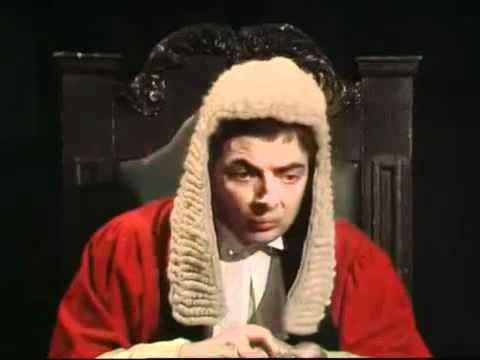
Because the programme was only 20 minutes’ duration our interviews were, of necessity, short – usually no more than five minutes’ long. In the studio this meant being quite strict with timing, but in the field you could interview at length and then edit down afterwards. Thus it was my interview with Rowan Atkinson in the studio passed in a flash. I can’t now recall what we talked about, but he was very gracious. At that time he was known for his role in the British comedy Not The Nine O’clock News and had yet to assume the persona of Mr Bean or Blackadder.

Rowan Atkinson in Not The Nine O'clock News.
Image: Pinterest
Unlike Arthur Lowe, Atkinson was a joy to interview, even though what we talked about is lost in my ever-depleting neurons. But I do recall one of the intriguing things about Atkinson and that was that he had a stutter. 

Nothing major, nothing that would cause excruciating embarrassment where he just couldn’t get a word out, but I could recognise the technique he used to overcome it – sometimes by changing a word he was about to use, or taking a breath or pausing as though thinking (I know about these because I stuttered as a child and used the same coping mechanisms). And yet, when you watch him in Blackadder or Johnny English there isn’t the slightest hint of a stammer.

I too discovered that if the microphone was on, I never ever stuttered, but outside of the studio I would occasionally still have trouble with words. 

I saw this same suppressive effect in action with another TVNZ presenter of the 80s who hosted a live Sunday studio-based religious programme. Off-air he had quite an obvious stutter, but once that red light was on you would never ever know. I wonder why nobody has done a thesis on this.

Rowan Atkinson kindly autographed my script that evening before he left with then-girlfriend Lesley Ash (later to star in Men Behaving Badly and more). I pinned the script to the wall of the dressing room I used, from where it was later stolen. I think I know who did it, but no doubt he had an 'aleebee'.

Irish comic Dave Allen was another charmer, and I'll tell you more about meeting him and others in Part Two. Soon. Well, sometime soon; let's get the festive season out of the way first :-)