To be clear, I'm not a photographer, just an amateur interested in snapping occasionally, so I hope you'll forgive any breach of photographic etiquette in these images. I do try and compose pics when opportunity allows - rule of thirds and all that - and I unashamedly crop and enhance for best effect in post-production where necessary; I believe that apps such as Snapseed and Photoshop are there to be used, so why not?
These are in no particular order, just randomly thrown together. Anyway, enjoy.
 Windows, Chester, England. Our eye is drawn through the ancient stone work in the foreground by the arches behind and on into the foliage. I liked the greens and browns too.

Fence, Chevrière, France. Some days the light just isn't right for photography, so instead of just the landscape I chose to have some fence and flora in the foreground. I enhanced the structure slightly in Snapseed too to give it more depth and drama.

My home town of Liverpool, England. Taken from the Mersey ferry. Again the light was dull with little contrast so I enhanced the structure of the image. It's still a bit flat but I'm pleased with the overall panorama of the waterfront.
 The Atomium, Brussels. Sod's law that the day I was there the sky was grey. I did take some wide shots of this iconic 1950s structure, but I prefer this tighter shot which I think emphasises the stunning architecture and construction - and draws your attention away from the weather!
 Fiddler's Ferry yacht marina, Merseyside, England.
 Here's one from Wellington, New Zealand.
 Meanwhile, in the USA... This is a pic of the Grand Canyon taken in 2012. Everyone else there was taking photos of the sunlight playing on the canyon walls, including my mate Shaun. I suggested to him that taking one almost directly into the sun would be a better shot so he handed me his camera and said, 'You take it then'. I did, and these are the mystical layers that resulted. He now claims ownership of the image!!
 I also turned it into a poster, which I occasionally do with images that I feel bear some extra exposure...

Such as this 2011 one of Fox Glacier on the west coast of New Zealand's South Island.
 And sometimes you really have to try hard to compose a picture so that modern life doesn't intervene and spoil it. Before Game of Thrones there was Cruas, on the Rhône in France, a medieval town extremely well-preserved and just begging to be photographed. However, it is bordered by a nuclear power plant to one side, a modern town in front, and a quarry on the other side, so getting this shot involved traipsing around until I could get a view that could have been taken 500 years ago.
 Meanwhile, in a park in England a few
 Here's one taken just in the next county, but back in December 1972. Shot on 35mm slide film, I was taken by the trees framing the sunset and wanted to capture the moment. Recently I converted the slide to digital format and discovered it wasn't as good as I'd remembered. I've done what I can in Photoshop but it remains more of a notion than an achievement.
 And now for something completely different: some sand forms. Taken on one day at Otaki Beach in New Zealand, I couldn't stop snapping at the way the wind, waves and wildlife had sculpted the sand.
 As we all know, some photos are circumstantial, and often turn out to be more interesting for it. Candid photography is one of my favourites. Sadly, today you're likely to be accosted for being a pervert if you try and take pictures of people without their knowledge, even in what's legally a public space. But anyway, back in 2005 I happened to be in a small pub in Ireland. A few of the locals were so riveted on the TV behind the bar they didn't even see me, but I like the outcome. I just call this 'Watching the Game'.

Occasionally I like to get up close and personal with a macro lens.
 While this wee chap obligingly posed for his photoshoot on a canal-side flower in France in 2013...
 ...along with his friend the praying mantis, who obviously objected to having his likeness taken.
 But if we're going to talk about personal, take a look at this monochrome study.
 Returning outside, and here we are back in France. This is one of my favourite most recent images, taken just last week in the city of Troyes. I like it because of the subdued lighting, and the way everything - the lamps, the curve of the buildings, the tables - leads the eye towards the mid-lower right of frame where the alley curves away into mystery, guarded only by a young man in a Covid mask checking his mobile.


Fence, Chevrière, France. Some days the light just isn't right for photography, so instead of just the landscape I chose to have some fence and flora in the foreground. I enhanced the structure slightly in Snapseed too to give it more depth and drama.
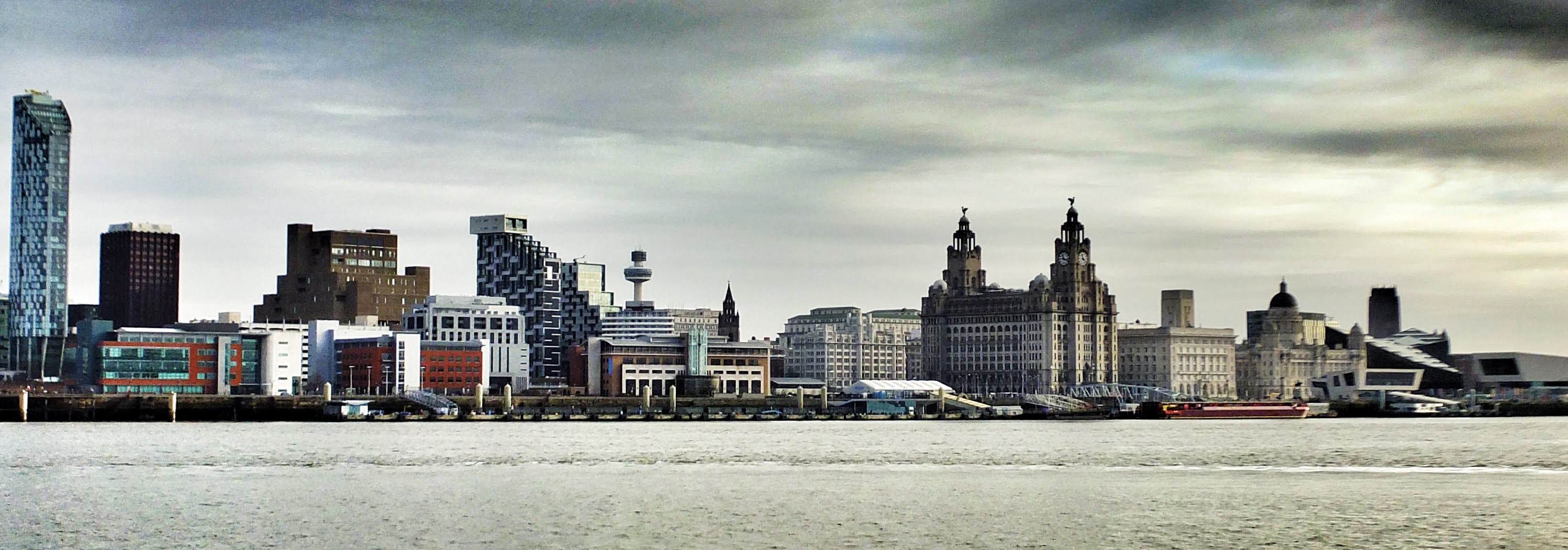
My home town of Liverpool, England. Taken from the Mersey ferry. Again the light was dull with little contrast so I enhanced the structure of the image. It's still a bit flat but I'm pleased with the overall panorama of the waterfront.


Finally some light! And sometimes, when you've got light you don't need anything else.

This 'fern ball' dangles mid-air behind the central library. I shot this through some foliage and stone sculptures to frame the ball itself, which also hid the wires that support it, making it seem to float in mid-air.


Such as this 2011 one of Fox Glacier on the west coast of New Zealand's South Island.
I was almost lying on my stomach to get the reflection in the glacial pool but it was worth it. I think so anyway!

I know, I could have just cropped it, but well...

autumns ago... this squirrel looks like it's
ready for a fight, with fists curled in anticipation!
(And yes, I added a vignette so that attention is drawn fully to the subject)

Unless you believe in heaven maybe!

I realised later that I'd created a series, so I collated the images into a format which leant itself to hanging on the wall.
Surprisingly, these aren't black and white images, they are actually in colour - it's just that the sand is a sort of monochrome.
The feather 'wave' at the top is my favourite, just because it really does look like one of those gigantic waves that surfers from all over the world travel to Portugal to ride.
But also I like that all these images came from within just a few metres of each other - the variety of opportunities on the beach that day was amazing.


Occasionally I like to get up close and personal with a macro lens.
This is a koru - an emerging fern frond - often used as a symbol of New Zealand, which is why I took it.
I like the depth of field; there is nothing to distract from the emergence of new growth and life.


Zara was a life-drawing model and happy to indulge my whim for what I hoped would be a stark outline photo. It didn't work because I had too much reflected light on the subject, but it works in a different way I think. Moody, erotic, yet tasteful.

I took this with my Nikon D50 - an oldie but a goodie. With no tripod I had to lean the camera against a convenient drainpipe to keep it steady.
Poignantly I think it captures the age of the virus. Normally an alley such as this would be bustling, with people sitting outside its restaurants and bars enjoying themselves, but France is taking Covid very seriously, and it looks like people are staying at home.

But this next one works (IMHO) because the crowds have suddenly parted on what would normally be an extremely busy central Liverpool street to give me a perfect view of this street performer, seemingly sitting on nothing at all.
The image is helped enormously by the position of the sun which, with the performer's shadow, emphasises that he's 'sitting' there with no visible means of support. It makes me smile.

As does this one from Innsbruck in Austria.
I love the way the bike has become almost fluid; drunk and unable to support itself it leans against its companion.
In a way, because there is nothing in the image other than bikes, it becomes almost anthropomorphic.
Or maybe I'm the one that's had too much to drink!

My in-laws used to live in a lovely rural area just outside the village of Chatte in France, in the Rhône-Alpes region. Adjacent to their main house was an old barn, and one day as the sun was fairly low in the sky I went with my camera to investigate it.
I liked the way the light streamed inside (illuminating an old and unfinished kit car at the rear that my father-in-law had started many years previously), but I liked even more the view from inside looking out. The wagon's wheel dominates the image but our eye is drawn to the sunlight top left, while the shadows within the barn form their own vignette. I can still hear the lazy buzz of insects, and feel the warmth of the sun.

It's a city built on its shipping and commerce (and yes, it has to be acknowledged, slave trading) but fell onto hard times in the 70s and 80s. Today its status as a major port is recovering, although its status as a tourist destination is perhaps more significant.
Down at the restored and imposing Albert Dock area one day, I snapped some images of a tall ship moored there, with the famous Liver Buildings in the background. I was aiming to capture Liverpool's early 20th century heritage, when - arguably - it was the most important port in the UK outside of London.
To add to the legacy feel I rendered it in monochrome.
(Legend has it that the two Liver Birds atop the building serve a purpose; the one in the picture facing the sea is looking for returning sailors, while the one on the other side looking inland is checking to see if the pubs are open!)

While in Merseyside, I took a photo of the industrial area of Rock Ferry, just because it is evocative of contemporary concerns about climate change etc. This image is heavily cropped and enhanced to emphasise the industry - in the original there was far more river in the foreground and the 'dark satanic mills' were in the distance.
As a gritty panorama it sends more of a message, and perhaps justifies today's options of filters and image manipulation. Or not - you can decide.
Finally, some arty and atmospheric shots, and at least one to make you go 'Awww'!


Although slightly blurred, it captures the motion of our kids running down the steps, and it's the movement - and colour - that appeals to me.

I turned this into a canvas print which now hangs in our ensuite, complementing the colours of the décor.
This was another occasion when I found myself almost flat on my stomach to get the shot. I sometimes think that a prerequisite to being a photographer is to have a qualification in yoga!

Nope, we're looking up through the transparent ceiling of a lift (elevator) in Brussels...
And finally, from this spring time, well, I don't need to say anything to explain do I?

Thanks for viewing. Feel free to share if you enjoyed the exhibition :-)
Cheers,
Mike