Showing posts with label social distancing. Show all posts

Friday, 1 May 2020

Covert-19: Secrets of the Neighbourhood

During lockdown The Tightly-Furled Umbrella has been going for daily walks and has discovered a whole new world...

For the past two years our neighbourhood has been hiding secrets. It has quietly kept various parts of itself hidden, covert, invisible. We have only just discovered this and we're really really annoyed, mostly because it's our fault.

You see, thanks to the pandemic Liz and I have been forced to explore our 'hood in some detail. Not just because our daily government-approved exercise regime gets us out of the house, but because we're now boldly going to places we've not been before, splitting infinitives along the way. 
Behind the houses, awaiting discovery...

We've taken to walking roads, alleys, public footpaths and alongside fields and hedgerows that only now have suddenly appeared. They've always been there of course, just not within our usual orbit. 

Eschewing maps or navigation devices, these days we just go wherever the fancy takes us, and it's woken the Magellan, Scott, and the Hillary in us. Or in Liz's case, the Earhart, Tereshkova and Eberhardt. We've drawn the line at donning pith helmets and carrying rifles, but the spirit of adventure and exploration is with us on every walk, even if it does take in the local grocery store on the way back.

Our local discoveries are even more revealing because we're exploring on foot instead of driving in the car; being perambulatory we can go down the narrow confines of alleyways or along walking and cycle paths where vehicles aren't allowed, and that's a good thing. Parks and other recreational spaces (where they aren't closed due to the virus) are very much on our agenda too, but it's the discovery of previously unknown trails that delight the most.

Last weekend our explorations led us down a dead-end road from where we escaped through a hedge and onto a lane leading to the headquarters of the London Irish Rugby Club, a significant structure with at least five adjacent rugby pitches. Who knew? Like most other sports grounds however, the club itself is closed for the duration, but it turns out the club's vehicles are being used by volunteers to deliver food to those who need it most during the pandemic. Thumbs up to them. 
Single file please...

Luckily - even though my chances of making a forward pass at Liz were thwarted - the public footpaths alongside and around were still open for walkers, runners and cyclists.

During these times of social distancing, we've all had to become attentive and inventive in how we use pathways, especially the narrow ones bordered by hedges. Meeting a family of three or four walking a dog coming towards you means someone has to 'give way' or take action to maintain two-metre/six feet distancing, which isn't always easy. Some of our local alleyways are so narrow there's only room for one person at a time, or a group snaking through in single file. 

On the footpaths around the rugby club we found ourselves backing into hedgerows more than once to make way for others, and became a little too familiar with nettles and brambles. On the plus side, one of these leafy diversions revealed a previously unknown lake on the other side, so that was a bonus.
Plenty of plots available, apparently

Circumnavigating the rugby fields without too many scratches we finally came to the local cemetery, which was open for walking through. 'Still plenty of plots available,' noted my wife. I wasn't sure if this was a genuine reference to there being plenty of spaces or whether she was hinting at my advancing years and my 'vulnerable' status. I made sure to put a spring in my step and walked confidently on. Healthily, confidently on. Virtually skipping over the headstones. 

A bit further on we discovered that the name of one of the local pubs has changed - it's now called The Three ishes. The landlady is probably wondering where the F one of her letters has gone. If it was stolen I hope they find the culprit as it's obviously a capital offence. (That's enough - Ed.)
What the F?

I said to Liz, 'When it finally reopens I look forward to going in for a rothy pint of beer and a plate of ish and chips'. (What did I just say? - Ed.)

Meeting others walking on the pavements (sidewalks for our American cousins) it has now become normal to practise the 'social sidestep', where one or the other of us takes a slight detour to maintain a safe distance. For many - including us - this sometimes involves stepping onto the road, and although the reduced overall traffic volumes have almost certainly resulted in lower vehicle accident rates, I do wonder whether pedestrian accident statistics have risen. It would be the supreme irony that you step onto the road to ensure you don't catch the virus only to be run over by a delivery van. Still, as Liz pointed out, plenty of plots available in the cemetery.


That said, the traffic volumes, especially in the backstreets, are now so low as to be almost non-existent, and Liz and I are often able to walk in the middle of the road in perfect safety. It means that those who use the sidewalks are a safe distance from us and don't have to weave or veer, although we do have to keep a keen ear for any vehicle approaching us from behind. So far it's only been the mail van. (Ooh, imagine that: if you were killed by a mail van would you then be subject to a 'post'-mortem?) (That's it, you're fired - Ed.)

During these behind-the-scenes urban strolls we've discovered whole neighbourhoods we never knew existed, including one we've nicknamed 'Beverly Hills' due to the gorgeous huge houses and manicured gardens. I'm sure the inhabitants peer nervously out at us, seeing us as infected zombies in the middle of their lovely road, but we don't care; their isolation is likely to be splendid and include indoor swimming pools, gymnasiums and home theatres. I'm guessing they never leave the house and have all their wants and needs delivered.
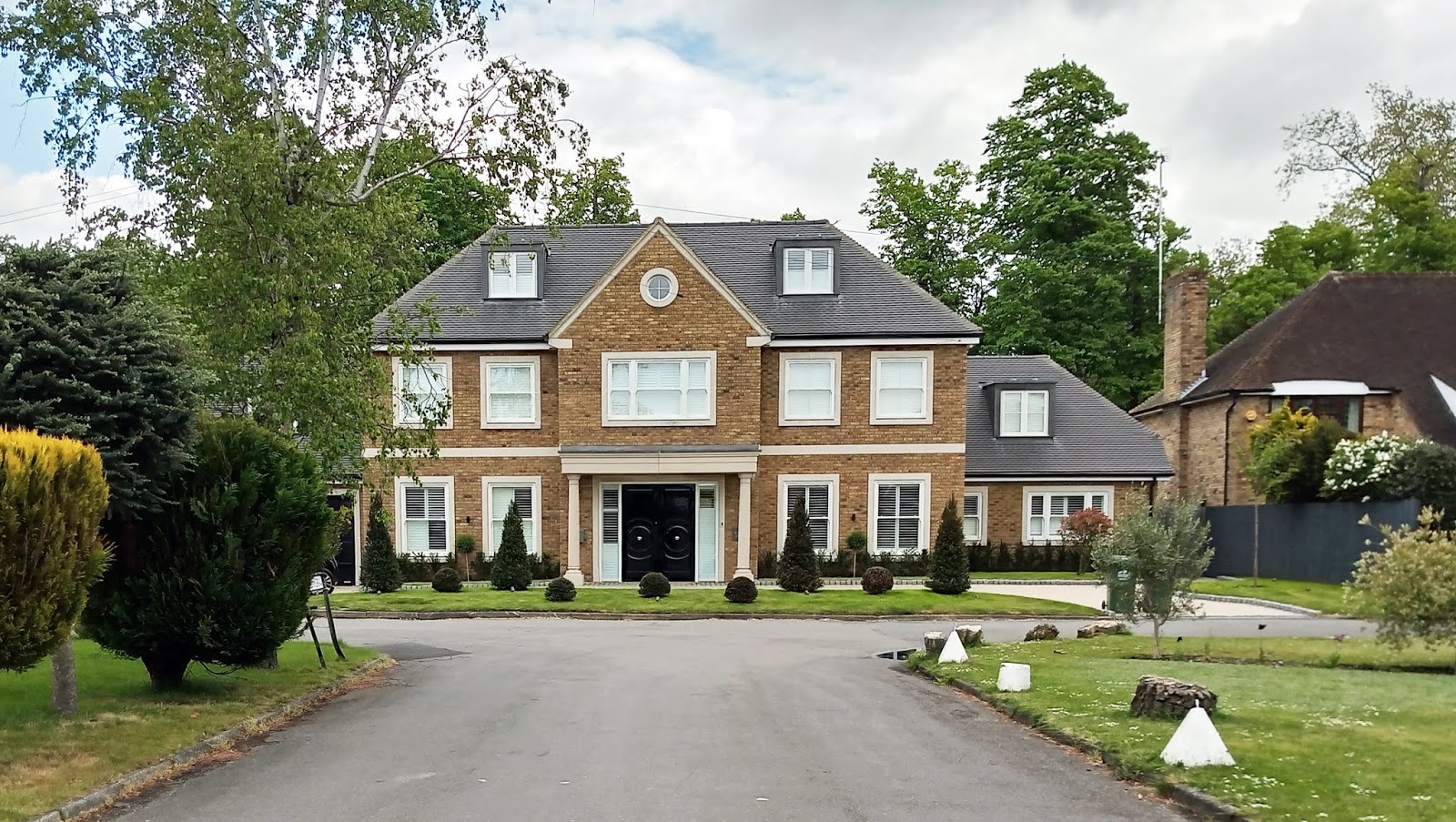

Splendid isolation
But they’re missing out. Perhaps they have no idea there’s a lake not far from the London Irish Rugby Club, (the what??) or that there are broad walkways and cycle trails behind the houses, that the main park is actually still open, or that the scandal of the neighbourhood is that there's something F-ing missing from The Three ishes pub. If so they're welcome to their splendid isolation. 

Stopping briefly at the local shop on the way home we bought a bottle of Prosecco. May as well celebrate that - for us at least - the enforced pandemic isolation has led to discovery, and we now know where we live.


Monday, 20 April 2020

Digging Into the Future

Will archaeologists and anthropologists in the year 2520 find evidence of the Covid-19 pandemic? The Tightly-Furled Umbrella ponders the possibilities…


I’ve always found archaeology fascinating, even though I’ve never taken part in a dig and have no qualifications. There was a time (let’s call it the Couchascene Period) where I could be found in front of the telly totally absorbed in Time Team. Trying to get me away from it would have been like trying to lift a complete Roman marble column out of the ground, so rooted to the spot was I.

Archaeological dig. Image: Wikimedia Commons
What I dig most about archaeology is the forensic detective work that goes with it – the analysis of items found, the layers in the ground, the comparison with what’s known historically of the area, the precision of carbon-dating and the eventual conclusions or suppositions about the finds. Modern-day archaeology has all the theatre of a crime drama, with clues unfolding gradually until a fuller picture emerges.

So you can imagine my excitement when I read recently about some ice core samples from the Swiss Alps (no seriously, stay with me...) that showed variations in medieval atmospheric lead pollution that can be linked to taxes, murders, wars and the rise and fall various kings in England between 1170 and 1219 C.E. Unlikely though it seems, the concentrations of lead (or absence of it) match the major historical events of the period almost exactly. Lead was a popular metal at the time, being used for all manner of things from church roofing, guttering and water pipes to stained glass windows and pottery glazing.

Murder of Thomas Becket (Image: Wikimedia Commons)
So, for example, when Archbishop of Canterbury Thomas Becket was murdered in 1170 by supporters loyal to King Henry II – and the king was subsequently excommunicated – lead production plummeted because no new churches were being built. This drop is reflected in the Swiss ice cores, which show extremely low levels of the usual lead pollution that would have been carried by prevailing winds from the mining areas of England. Similarly, three years later there is a spike in lead pollution as production ramped up due to a war with Scotland. There’s plenty more evidence over the following 50 years or so, with a clear correlation to historical events.

So what will future archaeologists see of the Covid-19 pandemic? Will there be any residual evidence anywhere that would correlate with the virus and changes to human activity of the time? There’s likely to be a PhD in this subject soon, and many a book (maybe The Corona Legacy?) but with lockdown time on my hands I thought I’d try and second-guess what archaeologists from, say, 2520 might find.
No, not yet...

Firstly, drawing on the Swiss ice core story above, there will almost certainly be a noticeable drop in general pollution particles – the dramatic drop in vehicle usage, especially in the world’s major cities – will likely leave a legacy in the earth. But that’s providing climate change hasn’t wiped out all snowfall and ice coverage before then.

Manufacturing has been hit hard by the virus and lockdown, so certain industries aren’t operating as fully (if at all), therefore raw materials aren’t needed anywhere near as much as they were. This echoes the ups and downs of lead mining in medieval times, but what sort of footprint it will leave and where is anyone’s guess, and might depend on archaeological technology yet to be invented.

Social distance queuing at a supermarket
Archaeologists who dig down to an old supermarket car park in 2520 might be delighted to discover traces of yellow paint on ancient asphalt, indicating where customers 500 years previously stood while queuing for access during the virus. (Imagine archaeologists’ excitement to discover an almost-complete Tesco, with aisles, shelves and – as today – absolutely no evidence of flour, baking powder or pasta…)

Dendrochronologists – who study tree rings and their meanings – might have a harder time than those analysing ice cores, but there is perhaps a possibility that some of the world’s trees will record the impact of Covid-19 as a blip in growth. If for example the lack of atmospheric pollution increases available sunlight to plants and trees, it’s possible they will enjoy a growth spurt as a result. Or possibly not; I’m no expert.

Bubonic Plague spread, 14th Century
Image: Wikimedia Commons
There might of course be some social and economic legacies from Covid-19. For example, the term ‘quarantine’ began as trentino in the mid-14th century in what’s now the city of Dubrovnik. It was a result of the Black Death, and imposed a period of 30-day isolation on ships arriving from plague-ridden lands. Later, in Venice, this period of isolation was extended to 40 days and was called quarantino, which is where we get the word quarantine.

Now we are all becoming familiar with terms like ‘self-isolation’ and ‘social distancing’. There will likely be some new phrases that arise from the pandemic and which might ingrain themselves in our dictionaries, and remain there for etymologists to marvel over half a millennium from now. ‘Covidiot’ – someone who deliberately ignores pandemic regulations – is one of them, while WFH (Working From Home) might well become an acronym that will endure.

That’s because working from home might eventually become the new norm if businesses and organisations globally recognise that productivity can be just as high with employees using their homes as their workplaces, with no need for corporate offices (paying massive rents) to be sited in inner-city locations. 
Yay! No commuting!

Maybe in 500 years' time anthropologists will (from their own homes naturally) convene globally via mind-melding technology to discuss the period in history when the concept of working from home crystallised into an accepted norm - the time of the pandemic known back then as 'Coronavirus'.

Maybe. Remains to be seen.


PS: If you enjoyed this blog please leave feedback, and sign up for alerts for future blogs!