Showing posts with label Coronavirus. Show all posts

Friday, 1 May 2020

Covert-19: Secrets of the Neighbourhood

During lockdown The Tightly-Furled Umbrella has been going for daily walks and has discovered a whole new world...

For the past two years our neighbourhood has been hiding secrets. It has quietly kept various parts of itself hidden, covert, invisible. We have only just discovered this and we're really really annoyed, mostly because it's our fault.

You see, thanks to the pandemic Liz and I have been forced to explore our 'hood in some detail. Not just because our daily government-approved exercise regime gets us out of the house, but because we're now boldly going to places we've not been before, splitting infinitives along the way. 
Behind the houses, awaiting discovery...

We've taken to walking roads, alleys, public footpaths and alongside fields and hedgerows that only now have suddenly appeared. They've always been there of course, just not within our usual orbit. 

Eschewing maps or navigation devices, these days we just go wherever the fancy takes us, and it's woken the Magellan, Scott, and the Hillary in us. Or in Liz's case, the Earhart, Tereshkova and Eberhardt. We've drawn the line at donning pith helmets and carrying rifles, but the spirit of adventure and exploration is with us on every walk, even if it does take in the local grocery store on the way back.

Our local discoveries are even more revealing because we're exploring on foot instead of driving in the car; being perambulatory we can go down the narrow confines of alleyways or along walking and cycle paths where vehicles aren't allowed, and that's a good thing. Parks and other recreational spaces (where they aren't closed due to the virus) are very much on our agenda too, but it's the discovery of previously unknown trails that delight the most.

Last weekend our explorations led us down a dead-end road from where we escaped through a hedge and onto a lane leading to the headquarters of the London Irish Rugby Club, a significant structure with at least five adjacent rugby pitches. Who knew? Like most other sports grounds however, the club itself is closed for the duration, but it turns out the club's vehicles are being used by volunteers to deliver food to those who need it most during the pandemic. Thumbs up to them. 
Single file please...

Luckily - even though my chances of making a forward pass at Liz were thwarted - the public footpaths alongside and around were still open for walkers, runners and cyclists.

During these times of social distancing, we've all had to become attentive and inventive in how we use pathways, especially the narrow ones bordered by hedges. Meeting a family of three or four walking a dog coming towards you means someone has to 'give way' or take action to maintain two-metre/six feet distancing, which isn't always easy. Some of our local alleyways are so narrow there's only room for one person at a time, or a group snaking through in single file. 

On the footpaths around the rugby club we found ourselves backing into hedgerows more than once to make way for others, and became a little too familiar with nettles and brambles. On the plus side, one of these leafy diversions revealed a previously unknown lake on the other side, so that was a bonus.
Plenty of plots available, apparently

Circumnavigating the rugby fields without too many scratches we finally came to the local cemetery, which was open for walking through. 'Still plenty of plots available,' noted my wife. I wasn't sure if this was a genuine reference to there being plenty of spaces or whether she was hinting at my advancing years and my 'vulnerable' status. I made sure to put a spring in my step and walked confidently on. Healthily, confidently on. Virtually skipping over the headstones. 

A bit further on we discovered that the name of one of the local pubs has changed - it's now called The Three ishes. The landlady is probably wondering where the F one of her letters has gone. If it was stolen I hope they find the culprit as it's obviously a capital offence. (That's enough - Ed.)
What the F?

I said to Liz, 'When it finally reopens I look forward to going in for a rothy pint of beer and a plate of ish and chips'. (What did I just say? - Ed.)

Meeting others walking on the pavements (sidewalks for our American cousins) it has now become normal to practise the 'social sidestep', where one or the other of us takes a slight detour to maintain a safe distance. For many - including us - this sometimes involves stepping onto the road, and although the reduced overall traffic volumes have almost certainly resulted in lower vehicle accident rates, I do wonder whether pedestrian accident statistics have risen. It would be the supreme irony that you step onto the road to ensure you don't catch the virus only to be run over by a delivery van. Still, as Liz pointed out, plenty of plots available in the cemetery.


That said, the traffic volumes, especially in the backstreets, are now so low as to be almost non-existent, and Liz and I are often able to walk in the middle of the road in perfect safety. It means that those who use the sidewalks are a safe distance from us and don't have to weave or veer, although we do have to keep a keen ear for any vehicle approaching us from behind. So far it's only been the mail van. (Ooh, imagine that: if you were killed by a mail van would you then be subject to a 'post'-mortem?) (That's it, you're fired - Ed.)

During these behind-the-scenes urban strolls we've discovered whole neighbourhoods we never knew existed, including one we've nicknamed 'Beverly Hills' due to the gorgeous huge houses and manicured gardens. I'm sure the inhabitants peer nervously out at us, seeing us as infected zombies in the middle of their lovely road, but we don't care; their isolation is likely to be splendid and include indoor swimming pools, gymnasiums and home theatres. I'm guessing they never leave the house and have all their wants and needs delivered.
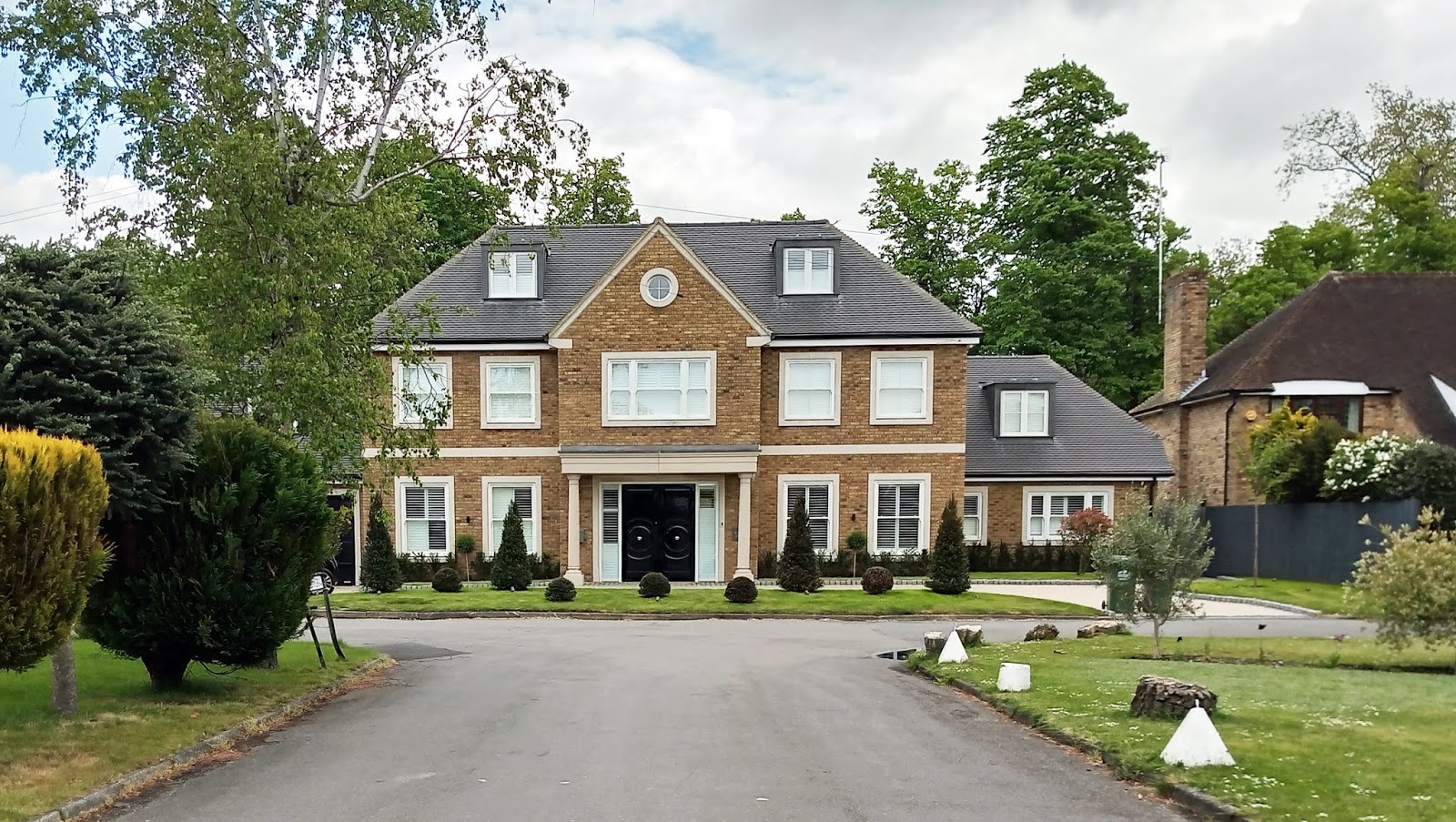

Splendid isolation
But they’re missing out. Perhaps they have no idea there’s a lake not far from the London Irish Rugby Club, (the what??) or that there are broad walkways and cycle trails behind the houses, that the main park is actually still open, or that the scandal of the neighbourhood is that there's something F-ing missing from The Three ishes pub. If so they're welcome to their splendid isolation. 

Stopping briefly at the local shop on the way home we bought a bottle of Prosecco. May as well celebrate that - for us at least - the enforced pandemic isolation has led to discovery, and we now know where we live.


Monday, 20 April 2020

Digging Into the Future

Will archaeologists and anthropologists in the year 2520 find evidence of the Covid-19 pandemic? The Tightly-Furled Umbrella ponders the possibilities…


I’ve always found archaeology fascinating, even though I’ve never taken part in a dig and have no qualifications. There was a time (let’s call it the Couchascene Period) where I could be found in front of the telly totally absorbed in Time Team. Trying to get me away from it would have been like trying to lift a complete Roman marble column out of the ground, so rooted to the spot was I.

Archaeological dig. Image: Wikimedia Commons
What I dig most about archaeology is the forensic detective work that goes with it – the analysis of items found, the layers in the ground, the comparison with what’s known historically of the area, the precision of carbon-dating and the eventual conclusions or suppositions about the finds. Modern-day archaeology has all the theatre of a crime drama, with clues unfolding gradually until a fuller picture emerges.

So you can imagine my excitement when I read recently about some ice core samples from the Swiss Alps (no seriously, stay with me...) that showed variations in medieval atmospheric lead pollution that can be linked to taxes, murders, wars and the rise and fall various kings in England between 1170 and 1219 C.E. Unlikely though it seems, the concentrations of lead (or absence of it) match the major historical events of the period almost exactly. Lead was a popular metal at the time, being used for all manner of things from church roofing, guttering and water pipes to stained glass windows and pottery glazing.

Murder of Thomas Becket (Image: Wikimedia Commons)
So, for example, when Archbishop of Canterbury Thomas Becket was murdered in 1170 by supporters loyal to King Henry II – and the king was subsequently excommunicated – lead production plummeted because no new churches were being built. This drop is reflected in the Swiss ice cores, which show extremely low levels of the usual lead pollution that would have been carried by prevailing winds from the mining areas of England. Similarly, three years later there is a spike in lead pollution as production ramped up due to a war with Scotland. There’s plenty more evidence over the following 50 years or so, with a clear correlation to historical events.

So what will future archaeologists see of the Covid-19 pandemic? Will there be any residual evidence anywhere that would correlate with the virus and changes to human activity of the time? There’s likely to be a PhD in this subject soon, and many a book (maybe The Corona Legacy?) but with lockdown time on my hands I thought I’d try and second-guess what archaeologists from, say, 2520 might find.
No, not yet...

Firstly, drawing on the Swiss ice core story above, there will almost certainly be a noticeable drop in general pollution particles – the dramatic drop in vehicle usage, especially in the world’s major cities – will likely leave a legacy in the earth. But that’s providing climate change hasn’t wiped out all snowfall and ice coverage before then.

Manufacturing has been hit hard by the virus and lockdown, so certain industries aren’t operating as fully (if at all), therefore raw materials aren’t needed anywhere near as much as they were. This echoes the ups and downs of lead mining in medieval times, but what sort of footprint it will leave and where is anyone’s guess, and might depend on archaeological technology yet to be invented.

Social distance queuing at a supermarket
Archaeologists who dig down to an old supermarket car park in 2520 might be delighted to discover traces of yellow paint on ancient asphalt, indicating where customers 500 years previously stood while queuing for access during the virus. (Imagine archaeologists’ excitement to discover an almost-complete Tesco, with aisles, shelves and – as today – absolutely no evidence of flour, baking powder or pasta…)

Dendrochronologists – who study tree rings and their meanings – might have a harder time than those analysing ice cores, but there is perhaps a possibility that some of the world’s trees will record the impact of Covid-19 as a blip in growth. If for example the lack of atmospheric pollution increases available sunlight to plants and trees, it’s possible they will enjoy a growth spurt as a result. Or possibly not; I’m no expert.

Bubonic Plague spread, 14th Century
Image: Wikimedia Commons
There might of course be some social and economic legacies from Covid-19. For example, the term ‘quarantine’ began as trentino in the mid-14th century in what’s now the city of Dubrovnik. It was a result of the Black Death, and imposed a period of 30-day isolation on ships arriving from plague-ridden lands. Later, in Venice, this period of isolation was extended to 40 days and was called quarantino, which is where we get the word quarantine.

Now we are all becoming familiar with terms like ‘self-isolation’ and ‘social distancing’. There will likely be some new phrases that arise from the pandemic and which might ingrain themselves in our dictionaries, and remain there for etymologists to marvel over half a millennium from now. ‘Covidiot’ – someone who deliberately ignores pandemic regulations – is one of them, while WFH (Working From Home) might well become an acronym that will endure.

That’s because working from home might eventually become the new norm if businesses and organisations globally recognise that productivity can be just as high with employees using their homes as their workplaces, with no need for corporate offices (paying massive rents) to be sited in inner-city locations. 
Yay! No commuting!

Maybe in 500 years' time anthropologists will (from their own homes naturally) convene globally via mind-melding technology to discuss the period in history when the concept of working from home crystallised into an accepted norm - the time of the pandemic known back then as 'Coronavirus'.

Maybe. Remains to be seen.


PS: If you enjoyed this blog please leave feedback, and sign up for alerts for future blogs!


Monday, 23 March 2020

78 Days Later


Okay I’ll admit it: I’m a fan of the apocalyptic and post-apocalyptic movie genres. But there’s a certain irony in the fact that movie directors seeking to portray deserted cities – streets empty of humans and vehicles, silence where there was once noise, emptiness where bustle used to be – now have perfect film sets in nearly every city in the UK, except of course all shooting is on hold due to Covid-19.

No zombies, yet
Movies such as 28 Days Later and their like often have to shoot such scenes at 4.30 in the morning in summer when there’s enough daylight for filming but hardly any traffic or people. The window of opportunity is a narrow one. Alternatively they arrange for roads to be closed (in 28 Days Later they even organised traffic police to arrange a ‘rolling stop’ on the M1 in both directions so they could shoot a lone taxi driving north without having to overtake anything but its own shadow).

But it’s the main news bulletins rather than the big screens now showing deserted streets (or not, in the case of those defying health advice and still congregating), empty stations and trains, and closed pubs and restaurants, and disturbingly of course these scenes are real.

Usually standing-room only
You can be sure though there are already documentary makers out there, recording the empty roads for later use in the look-backs and investigations into how Coronavirus affected the population and how the government handled it. News footage too will be used for illustration, and there’s certainly no shortage of that - the media is having a field day. Come January 11 next year – one year exactly after the first Covid-19 death was recorded in China – our screens will be infected with Coronavirus documentaries.

So here’s a thing: why not make your own doco? This coming Friday it will be 78 days after that initial Covid-19 death, and although it’s an artifice, 78 Days Later seems as good a time as any to begin recording what you and your family is doing in these uncertain and unprecedented times. Think of it as a sort of war diary, only without the conflict (yet).

There have of course already been wartime memes – cartoons showing children asking
Image: Wikimedia Commons
their father ‘what he did in the virus’ and referring to his stockpile of loo paper etc. – but the analogy with World War 2 is a genuine one. Liz and I decided on Saturday to walk to our local butcher and show our support, only to find a queue of around 20 people outside. The only thing missing was the ration books, but hey, early days.

As you know, supermarkets and other retails stores are already rationing the amounts people can buy as a response to greedy hoarders stripping the shelves of everything. Social media is now awash with ideas for how to manage self-isolation, what to cook, how to make do and mend. Colleagues of Liz’s who luckily have some land available have just bought hens for their egg-laying.

Supermarket and local shop rationing
All of these are genuine stories, responses to adversity, but never has society had so many options at its fingertips for recording such a particular moment in history. Whether it’s a phone camera, tablet, a camcorder, a sports GoPro, or even a humble tape recorder (and let’s not forget the written word too), this unique time begs to be filmed, noted, captured and retold again and again. And in this technologically-advanced age, anyone and everyone can do it.

So don’t wait for the professionals to bring out their productions 378 days later. Be part of it yourself, now. Tell your story and share it. We are ordinary people living through extraordinary times. This is history in the making.

How to Conduct an Interview

It may be that rather than simply record your own version of events, you want to capture the feelings and experiences of those around you (maintaining appropriate social distancing of course). In this scenario you might find yourself doing an interview, either face to face or, more safely, over the phone or a video link.

Having formerly worked in broadcasting for many years I know there are many ways to conduct an interview but I’m going to touch on just two; one is a favourite of mine which I simply call The Conversation, and the second is a more established method. Either will give your recording that professional edge.

The Conversation Interview

In order to elicit the information and emotions of whoever you’re interviewing, you need, in principle, only one formal question, and that’s the first one. In fact it’s not so much a question as a request, and in this case it is: ‘Tell me about how the Coronavirus is affecting you and those around you…’

This is deliberately open-ended designed to allow the interviewee to answer as they see fit. What you need to do is actively listen to their answers so that you can follow up accordingly just as you would in a normal conversation. For example, if they say something like, ‘The virus has completely changed everything in my life’ and then they stop, you need to ask ‘How?’, and let them continue.

Also, there’s nothing wrong with expressing your own reactions to what your interviewee says. If for example they reveal something surprising, it’s perfectly fine to respond with ‘Really?’ or ‘Wow’, but use these sparingly. As an interviewer your job is to draw out the story rather than be part of it, unless you’re recording yourself in a memoir scenario.

Your keyword friends in the conversation interview are the journalist’s staple: who, where, why, what, when, and how. These form the basis of all news stories. They also form the basis for the more conventional interview…

The Conventional Interview

In this scenario you prepare a list of questions that you know you want specific answers to, and which ensure you cover the topic both broadly as well as in detail.

So, applying these in an interview situation means asking such things as:
  • Who among your family and friends were affected?
  • How did it affect them?
  • Where were they at the time?
  • Why did it have such a big impact?
  • What did you/they do?
  • When did you realise that this was really serious?
…and so on. Obviously you can also use the ‘Tell me about…’ lead.

But the main thing is that you still have to actively listen to the answers and follow up on them, especially where they take you by surprise. Don’t become a slave to the list of questions you prepared. Ultimately you represent the people who are watching or listening to your interview, so be aware of your own emotions and respond accordingly.

That's it in a nutshell. Here are a couple of tips too:

Top Tip 1: Avoid asking too many closed-ended questions such as, ‘Was that terrifying?’ because it begs just a short answer. If all they say is ‘Yes’, then you are duty-bound to follow it up with, ‘How?’, so it’s better to give them a bigger canvas to work with and use a question framed as, ‘Many people must have found the situation terrifying; how was it for you?’

Top Tip 2: Avoid grunting, saying ‘uh-huh’, and verbalising your agreement or encouragement as it can be really distracting for the listener or viewer, especially if it’s a video situation and you’re off-camera. If you need to encourage your interviewee, use facial signals and body language: nod your head in encouragement, smile as appropriate, raise your eyebrows, shake your head in disbelief - all of these are silent yet effective means of encouraging your subject.

Good luck, and don't forget to share your stories!

P.S. If you have any comments simply click on the Comments or No Comments link below. Also, if you enjoy these blogs please share! :-)


Tuesday, 17 March 2020

Working From Home

The isolated BoJo
Britain's Prime Minister has said that I now have to stay at home for a couple of weeks. Not personally of course; Boris didn't call me up and say, 'Mike, BoJo here. Just wanted you to know that with Coronavirus now driving my policies even more than Dominic, it might actually be a good idea for you not to go to the pub. I mean, quite so often. Or preferably not at all. Also, stay away from restaurants and theatres etc. Cheerio!'

But I got the message, along with everyone else, that it's best to do a bit of that isolation thing, to help flatten the curve and so forth. On the back of Boris's announcement, my wife Liz has been told by her employers to work from home (or WFH as the acronym has it). 'WTF, WFH?' she exclaimed just yesterday when she got the directive. 'OMG!' she said, punching the air. She's trendy with her acronym usage, possibly due to FOMO.

Isolation essentials
FYI she's just come back from an 0630 trip to the supermarket to buy supplies for us - Burgundy, Chardonnay, Riesling, that sort of thing - and said that even at that ridiculously early hour Tesco was 'like a Saturday afternoon', so obviously everyone else is in survival mode and preparing for a fortnight of staying home. (Brings a whole new definition to the term Remainers, she noted)

But I can tell you now that I didn't punch the air - I just felt like punching Boris because I'm at home 99 percent of the time anyway, so I was already flattening the Covid-19 curve without even trying. And I've been wearing face masks, but that's because I spend most of my time doing home renovation stuff that involves lots of dust and chaos. (In fact we even developed a crest with the Latin motto for that: Pulvis et Inordinatio). In short, I deserve a mention in the Queen's Birthday Honours for services to public health. Mike Bodnar, D.I.Y., O.B.E.

So to be at home for two weeks is, for me, something of a busman's holiday (Millennials, just Google it) and my daily routines of measuring, sawing, sanding and painting will remain unchanged. I'm not sure whether my need for another box of 5x50 general purpose-type brass screws will qualify as 'essential' and enable me to travel to the hardware store but we'll see. And if I am allowed to go out at least I have a good supply of face masks, hairnet-type head covers, safety goggles and rubber gloves, so I can look like something out of The Andromeda Strain without trying.

Image: Wikimedia Commons
But Liz has come up with an idea that legitimately allows us out for 'essential travel': across the way from us is a row of houses in which almost every occupant is in the vulnerable category due to age and/ or medical conditions, so we're going to do a leaflet drop and offer to do their grocery shopping for them if they'd like. Of course they could choose to shop online and have everything delivered, but they might actually prefer a neighbour's help. As Liz pointed out, while Brexit divided the nation, it could be that Coronavirus brings it back together, united in adversity as it were. A bit like the Second World War and the Dig for Victory campaign, only more like Digging In for Victory.

The fact that while we're out doing shopping for our local vulnerables and that one of them might - just possibly, almost by accident - need some Chardonnay and a box of 5x50 brass screws is of course pure coincidence. Honestly officer.


P.S. If you have any comments simply click on the Comments or No Comments link below. Also, if you enjoy these blogs please share! :-)

Monday, 9 March 2020

In Lieu of Toilet Paper


It’s a little-known fact that Coronavirus isn’t just a respiratory disease, it also apparently causes madness. The symptoms are panic, increased pulse rate, a raging need to hoard and stockpile, and – in the event that the latter looks unlikely– a tendency towards violence.

This was evident from outbreaks of supermarket mayhem recently in which some customers, in fear of a government lock-down or the overall collapse of society as a result of Covid-19, have fought over stock on the shelves, in particular toilet paper.

Not worth fighting over
Yes, in the event of Coronavirus what we all obviously need is copious supplies of bog rolls so that when we really are on death’s door we can be smug in the knowledge that we can at least go to the loo in comfort and assurance.

In Australia, one of the least-affected countries so far, two Coronavirus-panicked women came to blows over toilet paper in a supermarket aisle and police had to be called. Video of the fight went viral on social media.

The incident, in New South Wales, led state police acting-inspector Andrew New to comment, ‘We just ask that people don't panic like this when they go out shopping. There is no need for it. It's not the Thunderdome, it's not Mad Max, we don't need to do that.’ Crikey, 'streuth mate.

The women were charged for fighting over the loo rolls, which presumably wiped any smiles off their faces.

Anyway, if indeed things do get a bit Mad Maxish and there are riots in supermarkets over toilet tissue, we’ll need to find some alternatives. The obvious ones are ordinary tissues like Kleenex and kitchen paper roll, but of course the savvy will have thought of this already. Soon there’ll be fights in the stationery aisles over reams of A4 paper, envelopes, and gift-wrap.

And of course now that I’ve suggested those practical alternatives it means there will likely be fights in any aisle selling anything remotely to do with paper, so it falls to me to introduce you to nature’s answer to toilet tissue: plants. Or to be precise, leaves.

Dock leaves, nature's loo paper
(Image: Wikimedia Commons)
I know I’m not the first person to realise this; hardened outdoor-types and of course post-apocalyptic preppers already know which foliage offer the best bum wiping alternatives, but I doubt such knowledge is widespread among the urban community. So I’ve done some quick research on your behalf, and present you here with a few top tips.

Firstly – and this seems (literally) painfully obvious – not all leaves are suitable for wiping yourself with. One website helpfully suggests avoiding plants with ‘irritable hairs, spikes or thorns’, and to use fresh green leaves rather than dried vegetation which might tear or disintegrate. Nettles are a no-no too.

So that’s what to avoid, but what features should we be looking for when browsing nature’s supermarket aisles, also known as hedgerows and forest paths? Well you don’t need to be a genius to work that one out; look for large leaves with a degree of thickness and resilience that won’t easily tear, and also leaves with fuzzy surfaces, or maybe smooth. It’s worth knowing that the underneath of some leaves can be fuzzier than the tops.

Here in the UK, the ubiquitous dock leaf is the hiker’s friend. But there are plenty of others, which vary in abundance depending what part of the world you live in but which share the feature of large leaves including: Big-leaf Magnolia, Mullein (sometimes called the Lumberjack’s or Cowboy’s Toilet paper), Broadleaf Plantain, Lamb’s Ear, and of course the humble moss. One website recommends using dried corn cobs. Take a look in your own garden or park and you’ll likely find some other options.

The Sun: Getting to
the Bottom of Things
But let’s not forget that the Romans used sponges which could be rinsed out after use. (History suggests these were often attached to the end of a stick and shared between soldiers in the latrines. When passed from one to another it was important to grab the correct end, hence the phrase ‘grabbing hold of the wrong end of the stick'!).

In the event that all the paper and plant options have either run out or prove too tricky to get, don’t forget that washcloths can be used and rinsed, as can cloth nappies, towels and even old T-shirts. Maybe not pleasant but as any parent who has used cloth nappies will tell you, a bucket of bleach works wonders.

Oh, and if all else fails, let’s not forget the humble newspaper; The Sun, Daily Mail and other tabloids will not only efficiently wipe your cares away, they will also give you immense satisfaction knowing that these papers have finally found their niche.